
Wine storage · 6 min read
Why a Sub-Zero wine column drifts warm in San Jose
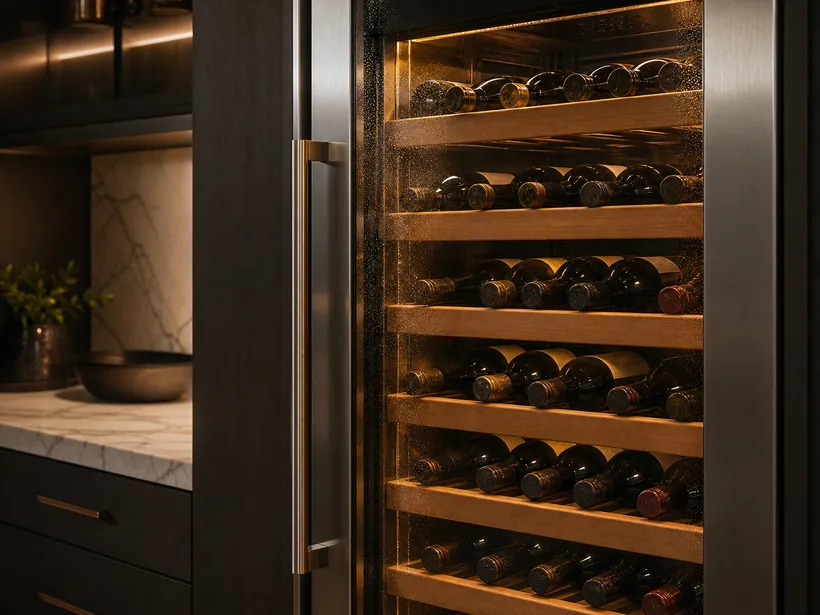
Plenty of San Jose homes keep a serious cellar in a small footprint — a Sub-Zero wine column tucked into a Willow Glen butler's pantry, a dual-zone undercounter unit in an Almaden kitchen, a tall integrated tower in one of the Saratoga-edge estates near the Santa Cruz Mountain wineries. Sub-Zero does build genuine built-in wine storage, and it is precision cooling, not a beer fridge with a label on it.
When one of these units starts running a few degrees off, owners panic about the whole bottle collection. Most of the time the unit is telling you something specific, and it is fixable.
Dual zones, and why the lower one usually slips first
A Sub-Zero wine unit holds two independent temperatures — a cooler zone for whites and sparkling, a warmer one for reds — using separate sensors and damped airflow between compartments. That split is the feature people buy it for, and it is also the part that most often drifts. When a zone sensor reads a degree or two off, the control either over-cools or quietly lets a zone climb, and the first sign is reds sitting warmer than the setpoint on a hot South Bay afternoon.
Because the two zones share one sealed system, a single misbehaving sensor or a stuck damper can throw the balance off without anything sounding broken. We read both zones against the display before assuming a part has failed — the gap between them tells us more than either number alone.
The sealed system, the condenser, and our climate
San Jose's warm, dry summers put real load on any built-in's condenser, and a wine column is no exception — it sheds heat the same way the refrigerators do, through a front grille that has to stay clear. Pack the grille with cabinet trim or stored bottles and the compressor runs long, the cooler zone struggles to pull down, and over years that extra duty wears the sealed system. A unit that can't hold its low zone on the hottest days is frequently an airflow and condenser story before it is a refrigerant one.
Vibration matters here too. A wine unit is supposed to run smooth so sediment in older reds settles undisturbed; a buzzing fan or a compressor mount that has loosened both hurts the wine and signals a unit working too hard.
Gaskets, UV glass, and repair versus replace
The door is half the appliance. A wine cooler's seal and its UV-tinted glass keep light and warm room air out, and a tired gasket lets San Jose summer heat leak in all day, which the cooler zone then fights continuously. A gasket and a fan are modest repairs that often restore a unit people had written off.
Replacement only really enters the conversation when the sealed system itself has failed on an older unit and the cost approaches a new column. Far more often it is a sensor, a damper, a gasket, or a loaded condenser — a focused diagnosis tells you which, and protects the bottles in the meantime. If your reds have crept warm or one zone won't hold, that is the moment to book, not after a heat wave cooks the rack.
Frequently Asked Questions
Does Sub-Zero actually make wine coolers?
Yes. Sub-Zero builds integrated and undercounter wine storage with true dual-zone temperature control — separate climates for whites and reds — distinct from their refrigerators and freezers. It is precision cooling, and we service it as such.
One zone of my Sub-Zero wine unit is warm but the other is fine — what's wrong?
That split usually points to a zone sensor reading off or a stuck damper between compartments, not a dead unit. Because both zones share one sealed system, a single sensor or damper fault throws the balance off while everything still sounds normal. A diagnosis confirms it.
My wine column hums or vibrates more than it used to — does that matter?
It can. A wine unit should run smooth so sediment in older reds stays settled. New buzzing or vibration often means a fan or a loosened compressor mount, which also makes the unit work harder. It's worth having looked at before it disturbs the collection.
How do I book a diagnosis?
Call (650) 668-1172 or use our online booking link. The $89 service call is a flat on-site diagnosis fee, waived when you proceed with the repair.
Guides
More South Bay guides
Book Now
Schedule a Visit
Book online in minutes and choose a window that works for you.