
Sub-Zero vs Gaggenau · 4 min read
How Does Gaggenau Compare to Sub-Zero for Wine Storage?
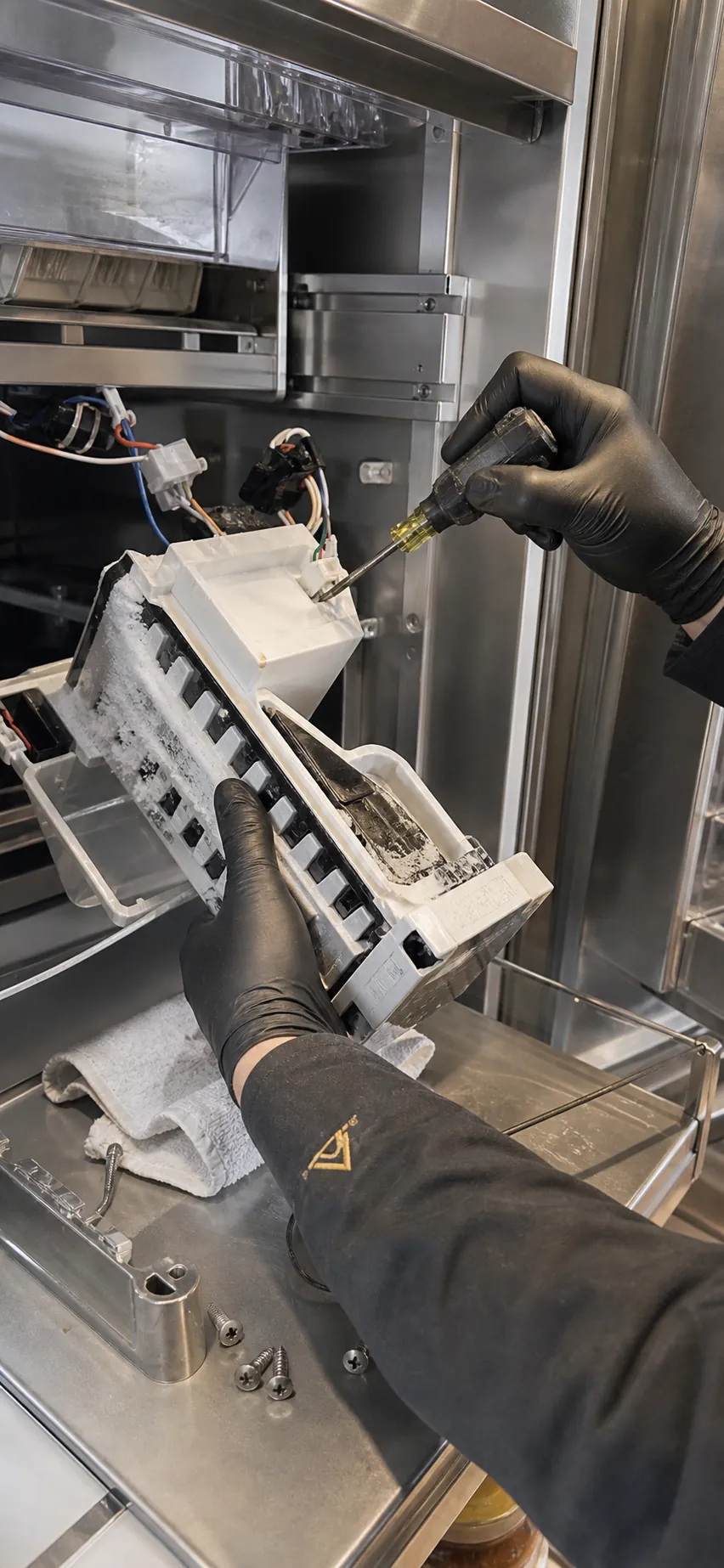
Gaggenau compares closely with Sub-Zero for wine storage: both brands build compressor-cooled, fully integrated wine cabinets that hold bottles at the 55°F cellar standard, so the real differences are design, zoning, and service access. Sub-Zero wine storage is built in the United States by a refrigeration specialist, while Gaggenau wine cabinets come from the German BSH group that also owns Bosch and Thermador.
This Sub-Zero and Gaggenau wine storage comparison covers construction, cooling, reliability, and parts access without crowning a winner.
How does Sub-Zero compare to Gaggenau for wine storage at a glance?
Sub-Zero and Gaggenau both design wine storage to sit flush in cabinetry, with tinted UV-filtering glass doors, front ventilation, and compressor cooling. Sub-Zero offers full-height wine columns and under-counter wine units, many with two independently controlled zones. Gaggenau sells its wine cabinets within a modular built-in lineup that matches its refrigerator columns. The Sub-Zero versus Gaggenau decision rarely turns on cooling; it turns on rack layout, zone count, styling, and local service.
What separates the construction of each brand?
Sub-Zero wine storage leans on rigid cabinets, roll-out racks that glide fully forward, and heavy tinted-glass doors. Gaggenau wine cabinets favor a sleek integrated look, with lit shelving that displays bottles as part of the kitchen design.
Before choosing a Sub-Zero wine column or a Gaggenau wine cabinet, measure your usual bottles. Wide Champagne and Burgundy bottles do not fit every rack spacing, and bottles pressed against the back wall block cooling airflow.
How do the cooling designs differ?
Sub-Zero and Gaggenau both use sealed compressor refrigeration rather than the thermoelectric chips in countertop coolers, so both wine units stay steady in a warm kitchen. A dual-zone Sub-Zero wine unit can keep one zone near 55°F for reds while the other runs colder for whites and sparkling wine; multi-zone Gaggenau cabinets work the same way. Wine also keeps best at roughly 50 to 70 percent humidity, so short door openings protect corks in either brand's wine cabinet.
What reliability patterns should owners expect?
Sub-Zero and Gaggenau wine units wear the same parts any built-in refrigeration appliance does: dusty condensers, evaporator or condenser fan motors, door gaskets, thermistors (temperature sensors), and, less often, control boards or sealed systems. Installation matters more than the badge. A Sub-Zero or Gaggenau wine cabinet that cannot breathe through its front grille, or sits beside an oven, runs its compressor longer. Vacuum the front grille every 6 months and keep bottles off the rear air channel.
How do service and parts access compare?
Sub-Zero wine storage shares many fans, sensors, and controls with Sub-Zero refrigerator columns, which keeps those parts familiar to Sub-Zero technicians. Sub-Zero San Jose publishes Sub-Zero repair bands such as $300-$600 for an evaporator or condenser fan motor and $300-$550 for a door gasket. Gaggenau wine cabinet parts move through the BSH network, so ask local service companies about Gaggenau support before buying.
Should design or service decide the purchase?
If the kitchen runs Sub-Zero refrigeration and Wolf cooking, a Sub-Zero wine column keeps panels and the service relationship consistent. If the kitchen is designed around Gaggenau, a Gaggenau wine cabinet keeps the look unified. Either way, confirm bottle capacity, zone count, cabinet ventilation, and who will service the wine unit later.
Frequently Asked Questions
Is Sub-Zero or Gaggenau better for long-term wine aging?
Either brand ages wine well when the cabinet holds a steady temperature near 55°F. Results depend more on stable settings, a sound gasket, and a clean condenser than on the badge.
Does a dual-zone wine unit need more maintenance?
No. A dual-zone Sub-Zero or Gaggenau wine unit needs the same care as a single-zone model: vacuum the front grille, check the door gasket, and keep air paths clear.
What should I check before calling a technician about a warm wine cabinet?
Confirm the set temperature, then look for a door left ajar, a flattened gasket, or a dusty front grille. If the zone still runs warm after 24 hours, a fan motor or sensor may need a technician. Sub-Zero San Jose handles this locally — call (650) 668-1172.
Can the same technician service both brands?
Not always. Sub-Zero specialists may not stock Gaggenau parts, which come through the BSH network, so ask which brands a service company supports early.
Guides
More South Bay guides
Book Now
Schedule a Visit
Book online in minutes and choose a window that works for you.
| Cellar-style setting | About 55°F for aging reds |
|---|---|
| Humidity range | Roughly 50 to 70 percent |
| Owner upkeep | Vacuum the front grille every 6 months |
| Common wear parts | Fan motors, door gaskets and sensors |
| Same-day service | Sub-Zero San Jose — (650) 668-1172 |
Book this repair: Sub-Zero Column Refrigerator Repair · Sub-Zero Repair vs Replace: How to Decide